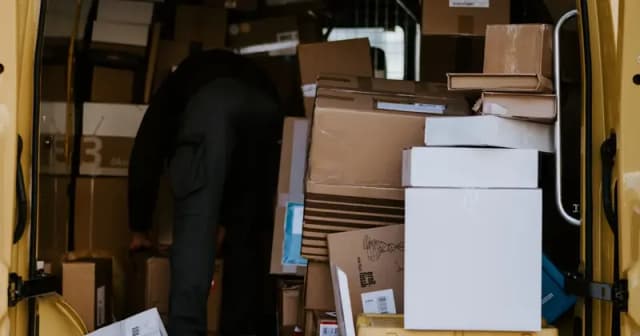
Amazon FBM Shipping: Compete with FBA Without the Fees
FBA fees eat 30-45% of your sale price. FBM sellers who nail their shipping game can keep that margin while still winning the Buy Box.
FBA Fees Are Eating Your Lunch — and You Might Not Even Realize It
Pull up your last FBA fee statement. Go ahead, I will wait.
If you are like most Amazon sellers, you will see that between referral fees, FBA fulfillment fees, storage fees, and the occasional "unplanned service fee," Amazon is taking somewhere between 30% and 45% of your sale price. On a $25 item, you might be netting $13-$16 before your own product cost.
Now imagine deleting the FBA fulfillment fee and the storage fee outright by fulfilling those orders yourself. What you take on instead is a shipping label — and whether that trade puts money back in your pocket on 500 units a month depends entirely on what you pay for postage. Buy postage badly and the label costs you more than the fee it replaced.
That is the FBM opportunity. But most sellers who try Fulfilled by Merchant fail at it because they treat shipping like an afterthought. The ones who succeed treat it like a system.
FBA vs. FBM: An Honest Numbers Comparison
Let me lay out real numbers on a product I sell both ways — a kitchen gadget that retails for $29.99.
| Cost Category | FBA | FBM |
|---|---|---|
| Amazon referral fee (15%) | $4.50 | $4.50 |
| FBA fulfillment fee | $5.40 | $0.00 |
| Monthly storage (per unit) | $0.35 | $0.00 |
| Shipping label (per unit, Ground Advantage retail, 1 lb to zone 4) | $0.00 | $10.60 |
| Packaging materials | $0.00 | $0.40 |
| Labor (pick/pack per unit) | $0.00 | $0.75 |
| Total fees | $10.25 | $16.25 |
| Net per unit (before COGS) | $19.74 | $13.74 |
But here is where it gets interesting. The FBA storage fees jump during Q4 (October through December) to about $2.40 per cubic foot. For bulky items that would otherwise sit through the peak, FBM deletes that charge outright — though it is only a net gain if the postage on a bulky parcel comes in under the FBA fulfillment fee you stopped paying.
And I am not even counting the FBA long-term storage fees that hit you if inventory sits longer than 180 days. I had one slow-moving product that cost me $1,800 in aged inventory fees last year before I pulled it out and switched to FBM.
The Buy Box Myth: FBM Sellers Can Win It
The biggest objection I hear: "But you can't win the Buy Box without FBA."
Wrong.
Amazon's Buy Box algorithm considers several factors:
- Price (landed price including shipping)
- Shipping speed (faster is better)
- Seller metrics (ODR, late shipment rate, valid tracking rate)
- Fulfillment method (FBA gets a bonus, but it is not the only factor)
The key factors for FBM Buy Box success:
Ship smarter, not harder
Compare USPS, UPS & FedEx rates in seconds — no signup required.
Setting Up Your FBM Shipping Operation
You don't need a warehouse. I run my FBM operation from a spare bedroom and a section of my garage. Here is the setup:
The Physical Setup
Shelving: Wire shelving from Costco, $60-$80 per unit. I have four racks holding about 800 SKUs. Everything is labeled with bin locations.
Packing station: A 6-foot folding table with everything within arm's reach — tape gun, box cutter, label printer, scale, various box sizes, void fill.
Label printer: Thermal printer, no ink required. I went through three inkjet printers in a year before switching. A thermal printer costs $150-$200 and pays for itself in ink savings within a month if you are printing 20+ labels a day.
Scale: Digital postal scale, accurate to 0.1 oz. Mine cost $25 on Amazon. I weigh every package before printing labels because Amazon will charge you back if the actual weight exceeds what you declared.
The Software Setup
Amazon Buy Shipping: Use it. Always. When you buy shipping through Amazon's integrated system, Amazon automatically uploads tracking and marks the order as shipped. This keeps your metrics clean. Amazon Buy Shipping also gives you competitive rates — not always the cheapest, but close enough that the convenience and metrics benefits are worth it for most orders.
Compare Shipping Rates tool: For orders where the Amazon rate seems high (usually packages over 5 lbs or going to far zones), I check a multi-carrier platform. It takes 15 seconds and sometimes saves $2-$5 on heavier packages.
Inventory management: I use a spreadsheet with bin locations, reorder points, and cost tracking. Fancy inventory software exists, but a well-maintained spreadsheet handles 500+ SKUs just fine.
Carrier Selection Strategy for FBM
This is where most FBM sellers go wrong. They pick one carrier and use it for everything. Smart FBM sellers match the carrier to the package.
USPS: Your Bread and Butter
For packages under 3 lbs, USPS is almost always cheapest. Specifically:
- Ground Advantage (8 oz and under): $7.90 retail to zone 1, rising to $9.45 to zone 8. Best for lightweight items in poly mailers.
- Ground Advantage (over 8 oz through 1 lb): retail prices this whole band at the 1 lb rate — $9.55 to zone 1, up to $12.90 to zone 8. There is no per-ounce break once you pass 8 oz.
- Ground Advantage (1-3 lbs): $9.55 retail at 1 lb to zone 1, up to $22.40 at 3 lbs to zone 8. Competitive for small boxes.
- Priority Mail Cubic: For items under 20 lbs in small, dense packages. Cubic prices on the outside dimensions of the box rather than what it weighs, so a small, dense parcel can land under the weight-based Priority rate. It is commercial pricing, not a counter rate, so quote it on your own account instead of working from a published table.
UPS Ground: The Heavy Package Champion
Once you cross 3-4 lbs, start checking UPS. Their Ground rates are often cheaper than USPS retail for heavier packages, especially for longer distances, but the size of the gap depends entirely on what tier each side is quoting you.
Zone 7-8 shipping on a 10 lb package:
- USPS Priority Mail: $53.55 to zone 7, $61.30 to zone 8 (retail)
- UPS Ground: $13-$17 (with commercial rates)
FedEx Ground: The Reliability Play
FedEx Ground offers similar rates to UPS Ground, sometimes a bit cheaper, sometimes not. Where FedEx shines is consistency — their delivery windows tend to be tighter, which helps your late shipment metrics.
When to Use Regional Carriers
If you are in certain metro areas, regional carriers like OnTrac (West Coast), LSO (Texas/South), or Spee-Dee (Midwest) can be 20-40% cheaper for deliveries within their service areas. They tend to have faster transit times too.
I use OnTrac for about 30% of my California and Pacific Northwest shipments. Average savings: $2.10 per package compared to USPS.
The Shipping Speed Problem (and How to Solve It)
Amazon customers expect fast shipping. Prime spoiled everyone. If you offer 5-7 day shipping on FBM, your conversion rate will suffer.
Here is how to offer competitive speeds:
Set handling time to 1 day. This means you commit to shipping within one business day of the order. It is tight, but manageable if you have inventory ready and a daily shipping routine.
Ship by 5 PM. USPS pickup is typically mid-afternoon. UPS and FedEx pickups can be scheduled later. Set up daily carrier pickups so you are not driving to drop-off locations.
Use the fastest affordable service. For most items, USPS Ground Advantage delivers in 2-5 business days. Combined with a 1-day handling time, your total delivery promise is 3-6 days. Not Prime speed, but close enough for many buyers, especially when your price is lower.
Consider Seller Fulfilled Prime. If your metrics are excellent and you can consistently deliver in 1-2 days within your region, you might qualify for Seller Fulfilled Prime (SFP). This gives your FBM listings the Prime badge, which is a massive conversion boost. The requirements are strict — 99% on-time delivery, 99.5% valid tracking — but achievable if you have tight processes.
Managing Returns on FBM
FBM returns are more work than FBA returns, but they are also more in your control.
With FBA, Amazon automatically accepts returns and often refunds the customer before inspecting the item. Returned items sometimes come back damaged, get classified as "unsellable," and you eat the loss.
With FBM, you control the return process:
This matters because you can:
- Inspect items before refunding
- Restock sellable returns immediately
- Negotiate partial refunds for opened/used items when policy allows
- Actually talk to the customer and sometimes resolve the issue without a return
The Hybrid Approach: FBA for Some, FBM for Others
I don't do 100% FBM. I don't do 100% FBA either. The smart play is matching each product to the right fulfillment method.
Best for FBA:
- Small, lightweight, fast-selling items (high turnover = low storage costs)
- Products with very low return rates
- Items where Prime badge dramatically impacts conversion
- Heavy or bulky items (FBA fulfillment fees scale with size/weight)
- Slow-moving inventory (avoid storage fees)
- High-margin items where you can absorb slightly lower conversion
- Seasonal products (don't pay Q4 storage premiums)
- Items you also sell on other platforms (shared inventory pool)
Common FBM Mistakes and How to Avoid Them
Underestimating labor time. Picking, packing, and labeling takes time. A realistic pace is 25-35 packages per hour for standardized products. If you are doing custom bundles or fragile items, it drops to 15-20. Factor this into your cost calculations.
Not automating label buying. If you are manually entering addresses and dimensions for each order, you are doing it wrong. Use Amazon Buy Shipping or connect a multi-carrier platform to your Amazon account. The time savings are enormous.
Skipping package weighing. Amazon audits package weights. If you declare 1 lb and the package actually weighs 1.5 lbs, you get a weight adjustment charge plus a penalty. Weigh everything. Every time. No exceptions.
Poor packaging leading to damage claims. FBM sellers are responsible for damage claims. If your item arrives broken because you skimped on bubble wrap, that is on you. I spend about $0.40 per package on proper cushioning materials and my damage claim rate is under 0.3%.
Ignoring Amazon's ship-by deadline. Late shipments are tracked and penalized. If you say you will ship by Thursday, it needs to scan at the carrier by Thursday. Build in buffer time — I set my handling time to 1 day but usually ship same-day.
What $10,000/Month FBM Sellers Do Differently
I have talked to dozens of successful FBM sellers. The ones who make it work share a few traits:
They treat shipping as a profit center, not a cost center. They know their cost per label to the penny and are always optimizing.
They batch their work. All picking in one pass, all packing in one session, all labels printed at once. This is 30-40% faster than handling orders one at a time.
They negotiate carrier rates annually. Even small volume sellers (100+ packages/month) can get discounts just by calling and asking.
They track every metric Amazon cares about — and maintain perfect or near-perfect scores. Metrics are the FBM seller's ticket to the Buy Box.
And they know when FBM does not make sense and are willing to use FBA for products where it is clearly the better choice. There is no ego in fulfillment strategy — only math.
Compare USPS, UPS & FedEx rates instantly with atoship — no monthly fees.
Try FreeSave up to 89% on shipping labels
Compare USPS, UPS, and FedEx rates side by side. Get commercial pricing with no monthly fees, no contracts, and no markup.